Compliance Managers, the Tour de France Managers and, FIFA
David Pope explains the role of the Compliance Manager in a CILEx Authorised Entity, and the skills needed.
About the author
David Pope is CLIEx Regulation's entity authorisation and supervision manager.
One year on from my last article on the role of the Compliance Manager, the two high-profile Compliance Managers I featured have seen the
real extremes of the Compliance Manager’s role ((2015) September CILExJ p23). For Alison Johnson, as Team Sky’s head of compliance,
it has been another successful year, seeing Chris Froome take his second Tour de France win as part of a dominant team performance
and no issues identified in a sport that has its challenges with keeping clean. Domenico Scala, the independent chairperson of FIFA’s audit and compliance committee, took the ultimate
stand of a Compliance Manager and handed in his resignation over fears that new rules would compromise independence and impede investigations into corruption at football’s troubled
world body. Domenico Scala did not believe that he would be able to do his job correctly.
These two high-pro file jobs demonstrate the highs and lows that may be seen in this role. Hopefully, you will all have shared Alison’s triumphs (if not actually cycling up the Avenue des Champs-Élysées ) rather than the challenges that Domenico faced. So, first, let’s recap the role of the CILEx Regulation Compliance Manager in an Authorised Entity who, in cycling parlance, could be described as the ‘domestique’ (ie, a road cycling racer, who works for the benefit of their team and leader).One year on from my last article on the role of the Compliance Manager, the two high-pro file Compliance Managers I featured have seen the real extremes of the Compliance Manager’s role (( 2015) September CILExJ p23). For Alison Johnson, as Team Sky’s head of compliance, it has been another successful year, seeing Chris Froome take his second Tour de France win as part of a dominant team performance and no issues identified in a sport that has its challenges with keeping clean. Domenico Scala, the independent chairperson of FIFA’s audit and compliance committee, took the ultimate stand of a Compliance Manager and handed in his resignation over fears that new rules would compromise independence and impede investigations into corruption at football’s troubled world body. Domenico Scala did not believe that he would be able to do his job correctly.
Why just one role?
Well, as we expected that we would be seeing applications from smaller entities for authorisation, it made sense to have one role, the Compliance Manager (Practice and Accounts Management), which could be covered by one person in a small entity, but with the flexibility to be shared by different people in a larger entity. The two roles are known as a Compliance Manager (Practice Management) and a Compliance Manager (Accounts Management). Understanding and managing risk is key for us as a regulator and for you in delivering a safe and secure service to your clients
What are my responsibilities?
As the Compliance Manager, you are the person who has lead responsibility for compliance and are the nominated contact between the Authorised Entity and CILEx Regulation. You will be required to ensure compliance with any statutory obligations of the body, its managers, employees or interest holders in relation to the Entity's carrying on of authorised activities, and to record any compliance failures and make such records available to CILEx Regulation upon request.
What skills will I need?
You must demonstrate an in-depth knowledge of practice management and accounts through your knowledge, skills and experience. This can be done by undertaking courses in these areas or relying on your experience, demonstrated by collating evidence, and presenting this in a logbook to show competence.
We are looking to see, in your portfolio of evidence and skills logbook, how you demonstrate knowledge of the following:
- Being part of a profession; •
- CILEx regulations; •
- Management of a legal entity;
- Business acumen;
- CILEx Accounts Rules;
- General bookkeeping; and
- Finances.
You should be able to understand and apply both current and future legislative and regulatory rules which govern running an entity regulated by CILEx Regulation, and take responsibility for planning and developing courses of action autonomously.
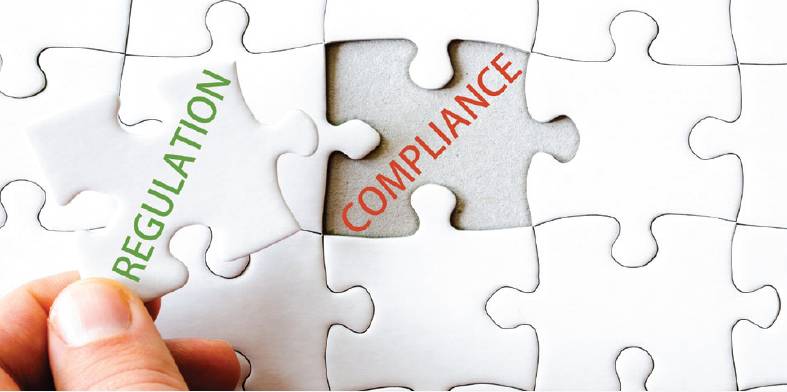
Understanding practice management and accounts management competence
To meet the competences required, you will need to have demonstrated your knowledge, understanding, skills and experience in meeting the specific learning outcomes. However, these outcomes tie directly into the processes and supporting documents that you will need to have in place to help in the running of the entity. Not everyone will have all the knowledge required of each of the learning outcomes; this is understandable, especially for those whose career may have meant that they have not had previous training in these outcomes.
Knowledge through courses
You are able to evidence your knowledge through courses you have completed that have provided you with the necessary skills. However, if you are new to these skills, one way to gain this knowledge is through the accounts management course offered by the Institute of Legal Finance and Management (ILFM).1
By completion of the course, applicants are able to acquire the knowledge, understanding, experience and skills set out in our competence framework. Applicants can then demonstrate their application of this knowledge by the way they use this practically for the new entity they will be part of, through the processes and procedures they put in place.
The course is split into individual modules, so applicants can select specific modules to fill any gaps in their understanding. These modules can also prove to be a useful refresher to those that have not touched on specific elements of the Compliance Manager role for many years.
ILFM has announced that it has commenced work on a practice management course.
Putting it into practice
While we have talked about the need to evidence understanding, the Compliance Manager also needs to demonstrate their ability to apply this knowledge. Understanding and managing risk is key for us as a regulator and for you in delivering a safe and secure service to your clients.
For a new business, this will be through the drafting of an office manual which contains the relevant policies for the business and is tailored to the needs of that firm. These policies will link to an effective compliance register that monitors the firm’s level of compliance and helps to drive continuous improvement. The good news here is that the office manual is required as part of the main entity application, so not only does it help the prospective Compliance Manager with their application, it will also be key to the success in gaining entity authorisation. Moreover, a well-drafted and implemented office manual will help the firm to succeed.
For existing firms, the Compliance Manager will also need to demonstrate their ability to apply their knowledge: sharing with us your roles and experience, with examples of how you have implemented compliance systems previously, is often the easiest way to achieve this.
Further support
As well as being happy to provide initial advice to applicants in this role, we have recently added some additional resources to the CILEx Regulation website to support those seeking authorisation as a Compliance Manager.2 These include examples of how you can meet the outcomes through courses or practical experience; how to complete an evidence log sheet; and, particularly, how to show how you will use that past experience or theoretical knowledge in the entity.
Hopefully, this article has given you a better understanding of the role of the Compliance Manager and what is required to be successful in the role. Interestingly, Chris Froome himself rode as a domestique for the now Sir Bradley Wiggins in his 2013 Tour de France win, so this role can provide a route to a successful career.
1 Details of the ILFM accounts management course are available at: www.ilfm.org.uk